
Do they ruin walls? Do they grow fast? What happens in winter? We’re clearing up the most common doubts so you can choose the ideal climbing plant species for your patio or balcony before March ends.
The desire is universal: a green, fresh, vibrant wall that gives us privacy and beauty. However, choosing a climbing plant is often surrounded by myths that end in frustration or, worse, damaged walls. In this transition towards autumn, it’s the ideal time to plan your garden’s structure.
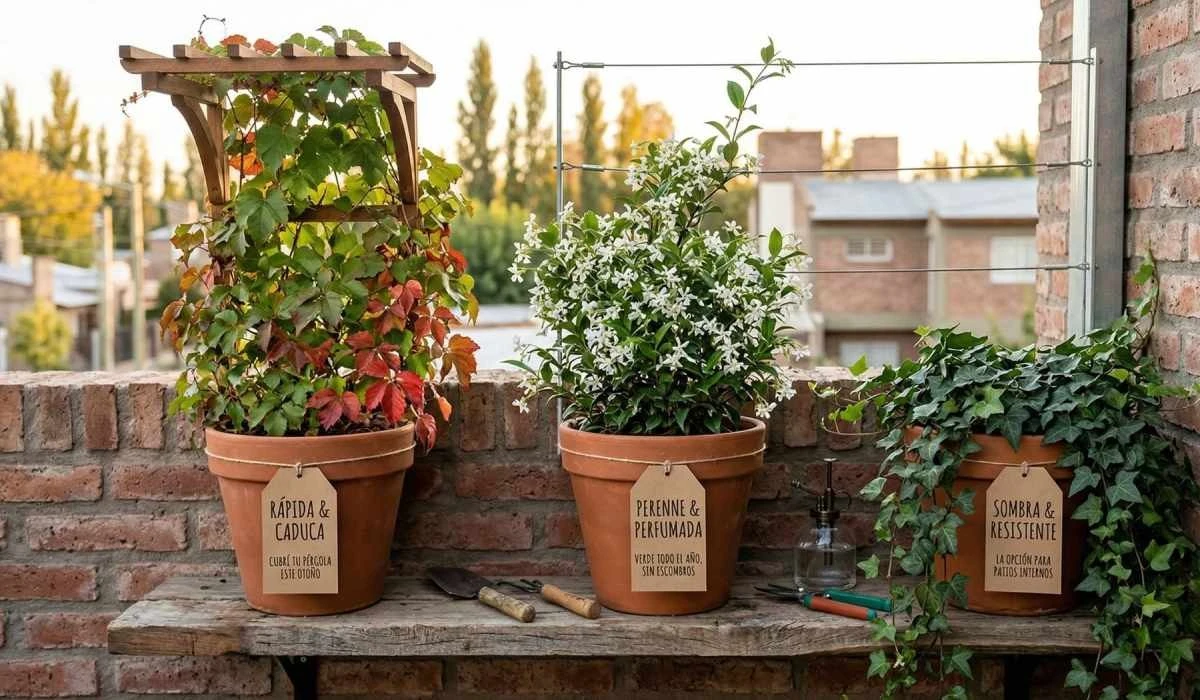
Whether you’re seeking the perfume of jasmine or the intense red of Virginia creeper, understanding how each climbing plant “thinks” is the key to successful landscaping. Here are the basic questions every urban gardener asks before buying their first seedling.
Climbing Plants: Which One Grows Fastest?
If you’re looking to cover a surface in record time, Ampelopsis and Milkweeds (Ficus pumila) are the winners. In a single season, they can cover several meters if they have good watering and sun.
- Expert tip: Help them with a thin wire guide at the beginning; once they take off, nothing stops them.
Climbing Plants: Is It True They Damage Walls?
It depends on the “gripping system.” Those with suction cups (like English Ivy) can mark plaster if you pull them off suddenly.
Those with tendrils (like grapes) or those that are twining (wrap around, like Wisteria) don’t damage masonry but need a support structure (cables or wood).
Climbing Plants: Will I Have Greenery All Year Round?
This is the big dilemma: deciduous or perennial?
- Perennials: Keep their leaves (Milkweed, Ivy). Ideal for blocking your neighbor’s view 365 days a year.
- Deciduous: Lose their leaves in winter (Virginia Creeper, Wisteria). These are best for pergolas, as they provide shade in summer and let the necessary winter sun through.
Climbing Plants: What If My Patio Gets Little Sun?
Not all plants need full sun to shine. For dark corners or internal patios, Ivy or Cissus are the most resilient options.
Don’t expect spectacular flowers in the shade, but you will get a deep, constant green that endures everything.
Climbing Plants: Is March a Good Time to Plant?
It’s the best! The soil is still warm from summer, but the air has already cooled. This allows the plant to develop strong roots before the first extreme cold, ensuring it’s established and ready to explode by next spring.
So, have you chosen your climbing plant yet? What challenges have you faced?